

The 6th International Conference on Mechanical Automation and Electronic Information Engineering (MAEIE 2026) Concludes Successfully
On November 14, 2026, the 6th International Conference on Mechanical Automation and Electronic Information Engineering (MAEIE 2026) was held in Jiangmen, Guangdong, and concluded successfully. The conference was hosted by Wuyi University and organized by its School of Mechanical and Automation Engineering, with the University of Macau, South China University of Technology, Sun Yat-sen University, and the Institute of Intelligent Manufacturing of the Guangdong Academy of Sciences serving as co-organizers. AiScholar provided technical support. Experts, scholars, early-career researchers, and graduate students from universities, research institutes, and companies in the fields of mechanical engineering, automation, and electronic information from across China gathered to exchange ideas on recent advances, key technologies, and engineering applications.

The opening ceremony was chaired by Professor Xinmo Li, Dean of the School of Mechanical and Automation Engineering at Wuyi University. Professor Chaojun Dong, Vice President of Wuyi University and a member of the University’s Party Standing Committee, delivered a welcome address on behalf of the University. He noted that 2026 marks the beginning of China’s 15th Five-Year Plan period, as efforts to build China into a manufacturing powerhouse continue to advance. The intelligent transformation, digitalization, and network connectivity of industry, together with the integration of artificial intelligence and advanced manufacturing, are becoming important drivers of new quality productive forces. Wuyi University will continue to uphold its educational philosophy of “taking root in the hometown of overseas Chinese, serving society, fostering collaboration at home and abroad, and pursuing distinctive development,” as it works to become a high-level application-oriented university distinguished by its strong service to the Guangdong–Hong Kong–Macao Greater Bay Area and its distinctive identity as a university with deep ties to overseas Chinese communities. Professor Dong expressed his hope that the conference would foster original research through the exchange of ideas, help translate innovation into industrial applications through collaboration, and inspire young scholars to align their academic pursuits with China’s goals of strengthening its scientific and technological and manufacturing capabilities.
 |  |
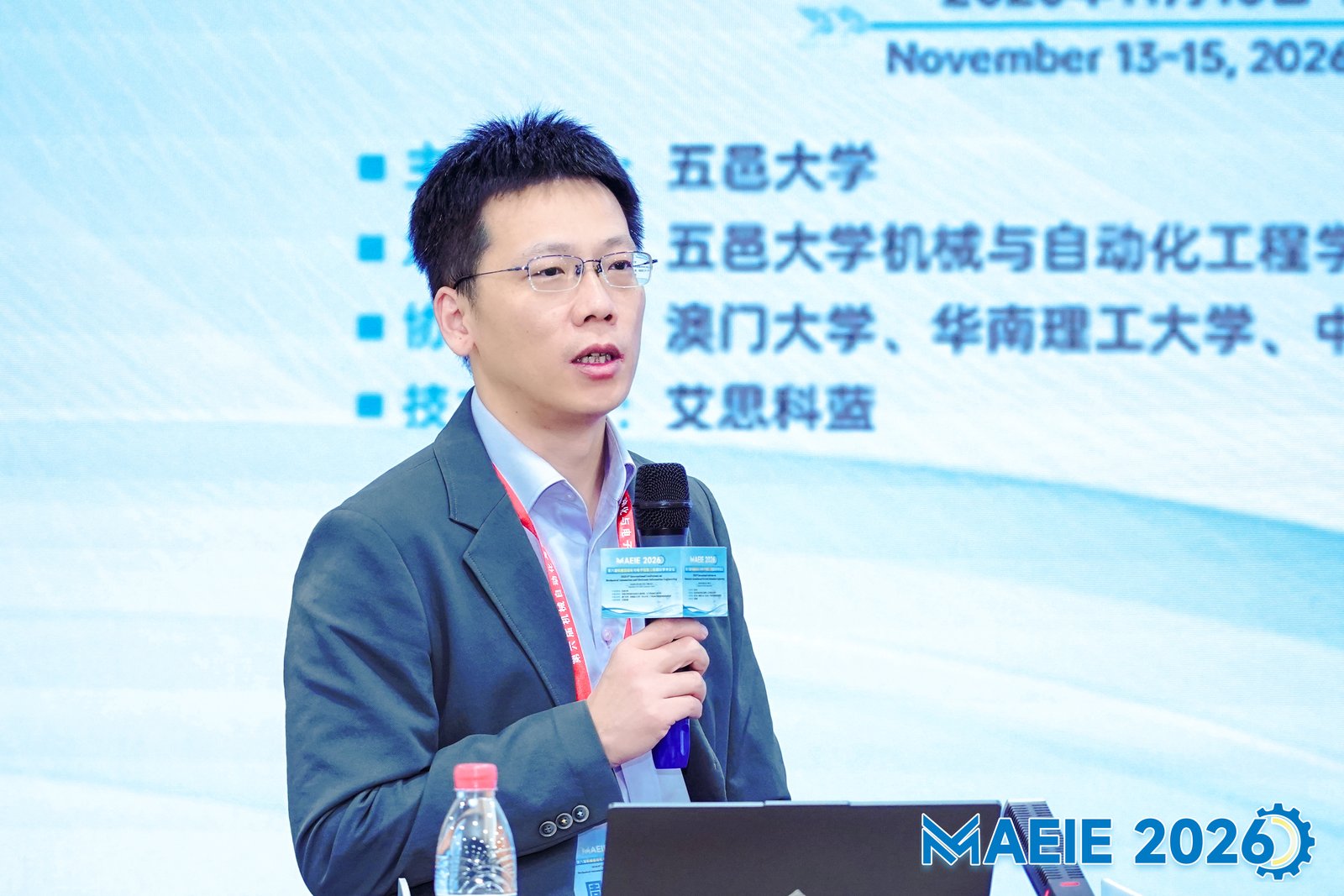
The conference’s keynote presentations were chaired by Professor Baiping Xu of Wuyi University’s School of Mechanical and Automation Engineering. A number of distinguished scholars shared their latest research. Professor Yingchun Guan of Beihang University, Professor Yisheng Guan of Guangdong University of Technology, Professor Xuefeng Zhou, a researcher at the Institute of Intelligent Manufacturing of the Guangdong Academy of Sciences, Professor Xu Lu of Guangdong Polytechnic Normal University, and Associate Professor Ping Wang of Sun Yat-sen University delivered presentations on topics including laser-driven precision manufacturing and micro-/nanostructure control; dynamic modeling and balance control of novel mobile robots; robotic precision disassembly of power batteries; visual perception and healthcare applications; and haptic feedback and dexterous manipulation. Spanning topics from precision manufacturing to human–robot collaboration, the presentations offered a broad view of technological advances at the intersection of mechanical automation and electronic information engineering.
 |  |  |
 | 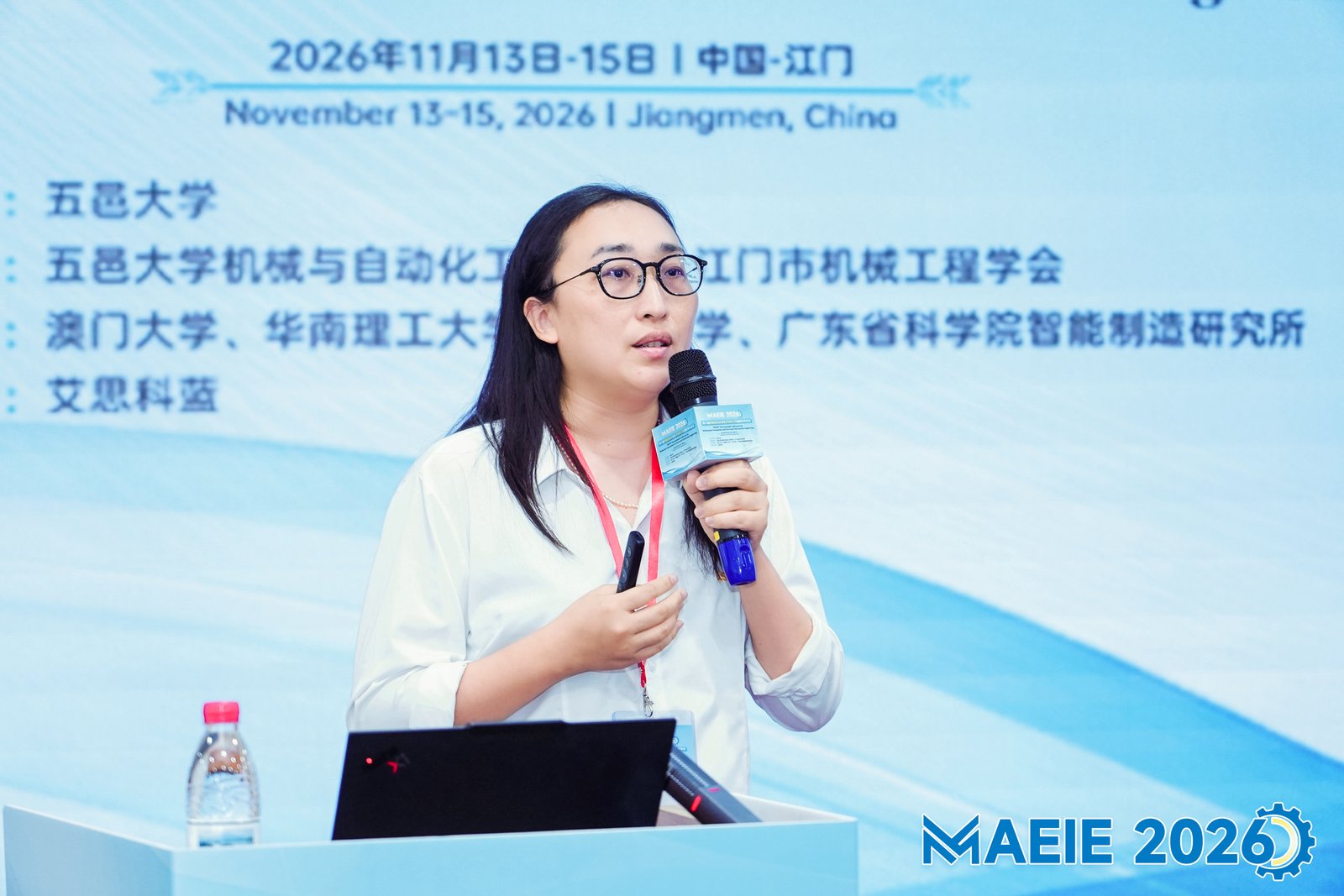 |  |
The conference also featured oral presentations by early-career researchers from Wuyi University, Greater Bay Area University, Nanjing University of Aeronautics and Astronautics, Harbin Engineering University, Suzhou City University, and Xi’an Shiyou University, among others. Their presentations covered a wide range of topics, including path teaching for robotic arms; 3D human pose estimation; vision-based servoing for grasping; co-simulation of aircraft fuel and aerodynamic test systems; visual-inertial odometry; modeling and performance evaluation of mechanical equipment such as planetary gearboxes and large bearings; NURBS curve interpolation and acceleration/deceleration control; system vibration response and damping optimization; point-cloud segmentation in industrial environments; and non-contact monitoring of physiological parameters in pigs. Together, the presentations showcased the active research and solid contributions of early-career researchers working across mechanical engineering, automation, and information processing.
To encourage young scholars to pursue academic research and innovation, and to provide them with opportunities to present their findings and exchange ideas, the conference established Outstanding Paper and Outstanding Poster Awards. The awards recognize young researchers’ achievements in their respective fields, promote academic innovation, and foster an ambitious, collaborative atmosphere of learning and exchange.
 |  |
Since its inception, MAEIE has been held for six consecutive editions and has become an influential international platform for academic exchange in mechanical automation and electronic information engineering. Looking ahead, MAEIE will continue to advance scholarship and serve industry, contributing to technological innovation and high-quality development in these fields.